

Healthcare Scheduling Ecosystem
Designing and evolving a multi-surface scheduling platform supporting millions of healthcare appointments.
Years
2024-Present
Company
Kroger Heath
-
Kroger Health & Wellness offers pharmacy and clinic services across thousands of locations nationwide. Appointment scheduling is a critical entry point to care—supporting vaccinations, clinical visits, and ongoing patient services.
The scheduling experience spans multiple surfaces:
Customer-facing web and mobile experiences
In-store kiosk flows
Associate and clinician tools used by pharmacy and clinic teams
As demand increased—particularly during peak vaccine seasons—the existing scheduling system struggled to support growing complexity, operational constraints, and evolving patient needs.
-
Product Designer — Health & Wellness
I served as the lead designer for the scheduling experience, owning end-to-end UX across customer, kiosk, and associate tools. My work focused on shaping the experience strategy, interaction models, and workflow patterns that connected these surfaces into a cohesive system.
Scope included:
Customer scheduling journeys (web + mobile)
In-store kiosk scheduling
Associate and clinician scheduling tools
Cross-surface logic for eligibility, availability, and capacity
I partnered closely with product management, engineering, analytics, pharmacy operations, clinic teams, and compliance, navigating both technical and regulatory constraints.
-
Scheduling in healthcare is rarely simple. At Kroger, the system needed to balance:
Complex eligibility rules
Real-time inventory and staffing constraints
Multi-patient and family scheduling needs
High seasonal demand (especially vaccines)
Consistency across customer and associate experiences
From a user perspective, this complexity showed up as:
Confusing service selection
Unclear availability
High drop-off during critical steps
Increased burden on pharmacy teams due to rework and clarification
From a business perspective, inefficiencies directly impacted:
Appointment completion
Vaccine volume
Operational strain at store level
-
Rather than treating these as isolated UX issues, I approached scheduling as a system.
My work centered on:
Mapping end-to-end workflows across surfaces
Identifying decision points where users lost confidence
Clarifying system logic without oversimplifying constraints
Creating scalable patterns that could evolve with the platform
This resulted in a series of focused initiatives that incrementally improved the ecosystem.
Key Initiatives
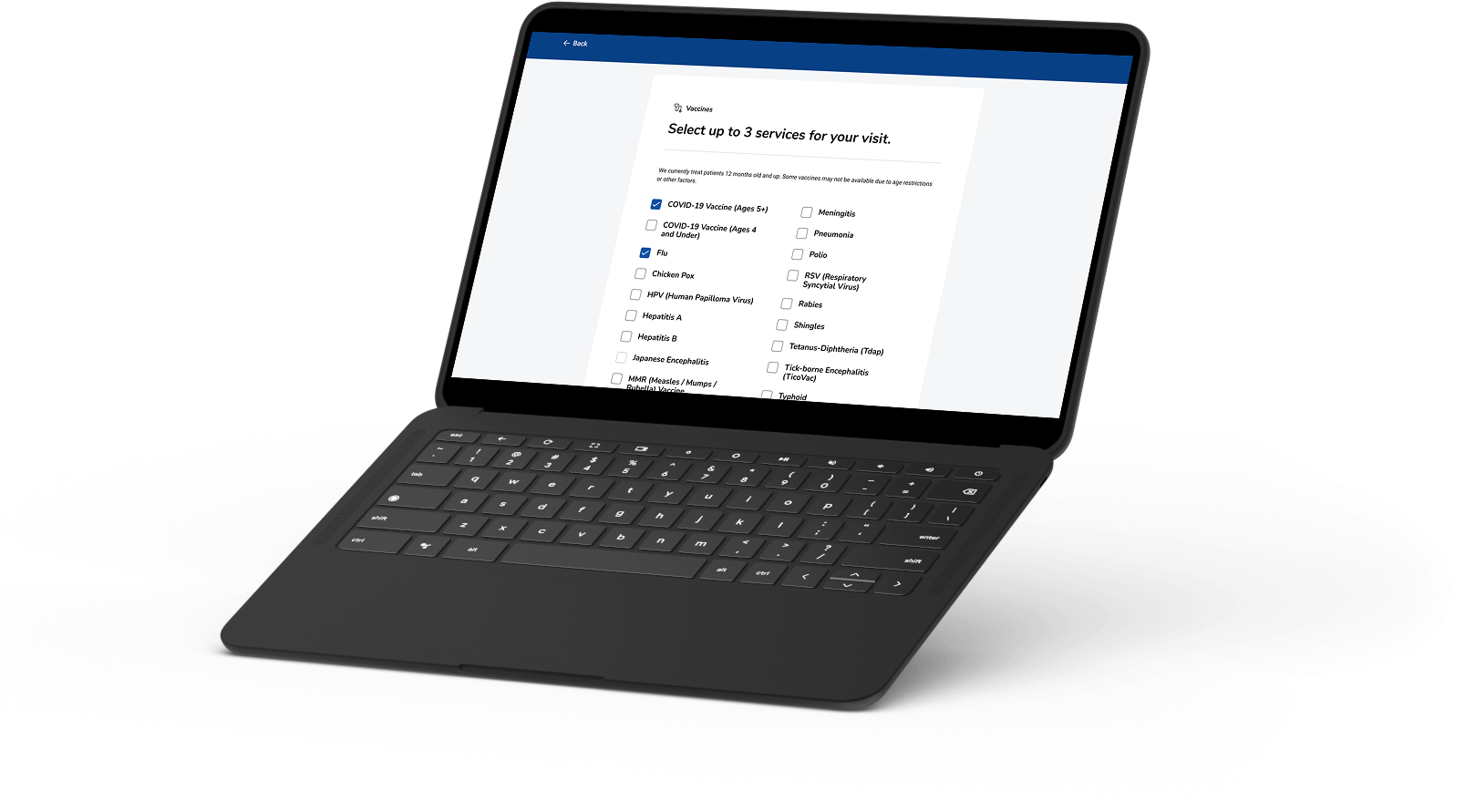
Vaccine Selection Optimization
Problem
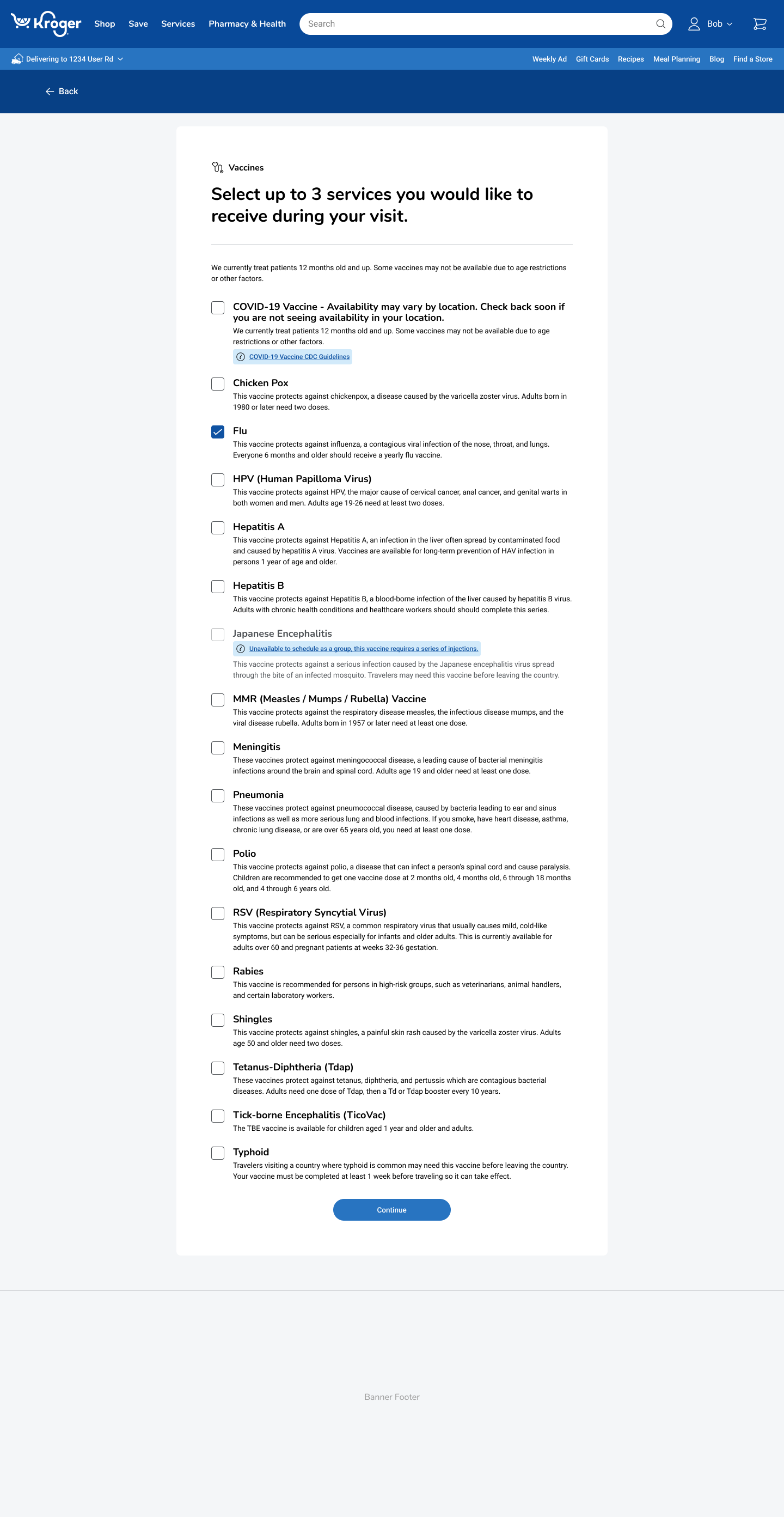
Customers struggled to understand vaccine options, eligibility requirements, and service differences—leading to hesitation and abandonment early in the flow.
Approach
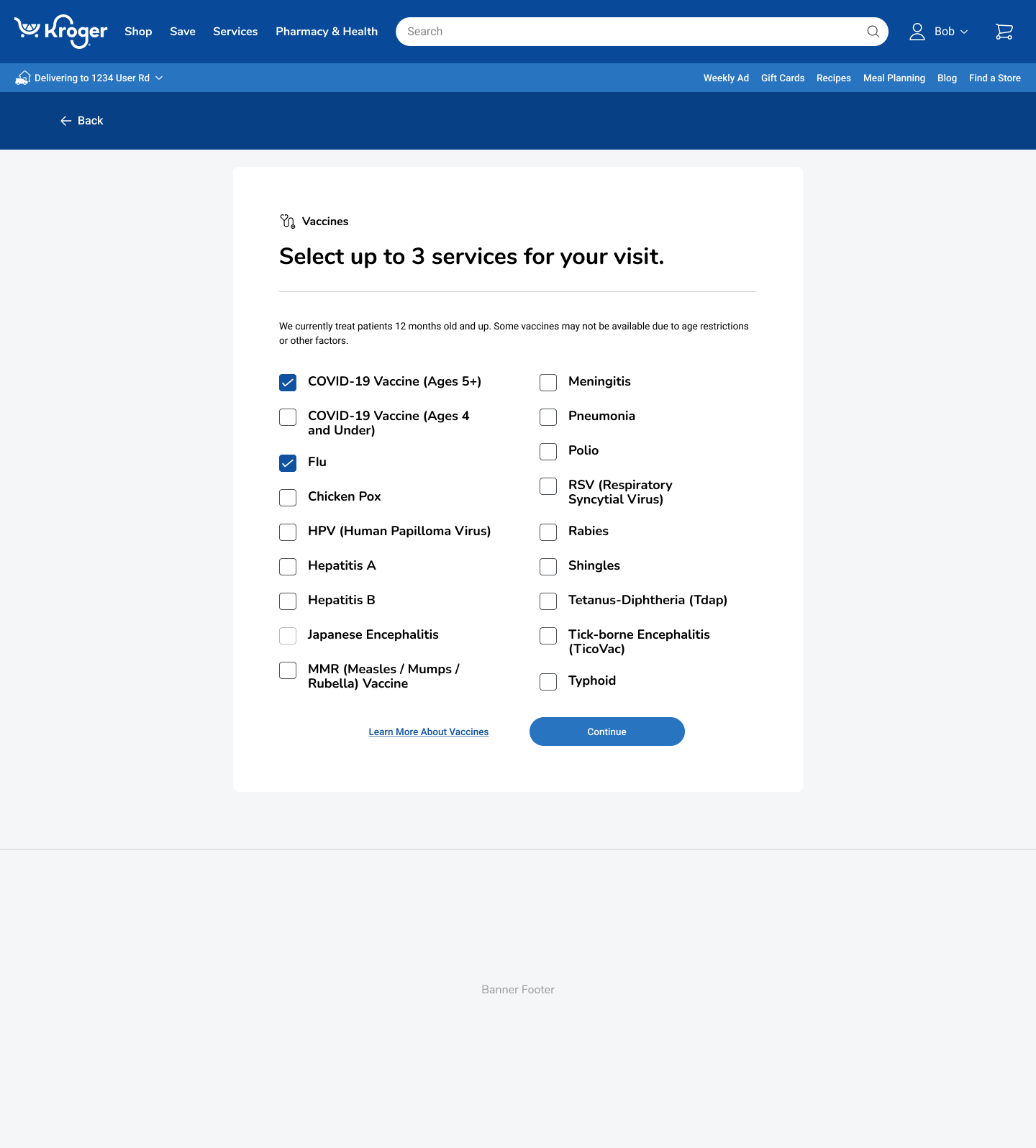
I worked with analytics and product partners to identify where users stalled, then redesigned vaccine selection to reduce cognitive load and clarify decision-making.
Solution Highlights
Simplified option presentation
Clearer eligibility and service explanations
More confident handoff into appointment selection
Impact
Reduced early-stage confusion
Improved flow completion during high-volume periods
Before
After
Multi-Patient Vaccine Scheduling
Problem
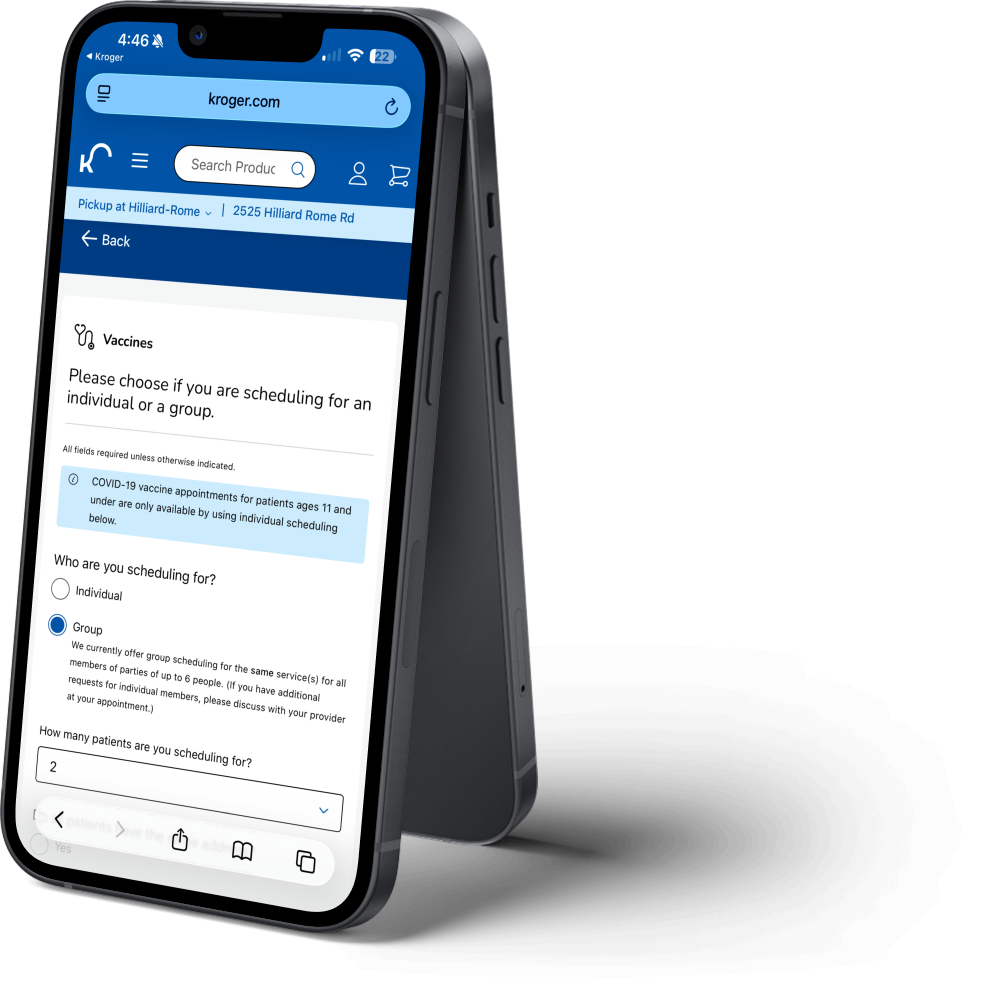
The existing scheduler assumed one patient per appointment, making it difficult for families and caregivers to book together—especially during flu and COVID seasons.
Approach
I led the redesign of the scheduling flow to support multi-patient booking, coordinating closely with engineering, analytics, pharmacy operations, and compliance.
Solution Highlights
Streamlined multi-patient flow across devices
Reduced form repetition and unnecessary steps
Improved clarity around availability and constraints
Impact
46% reduction in customer drop-off
+12% year-over-year increase in vaccines administered
+27% year-over-year market share growth during peak season
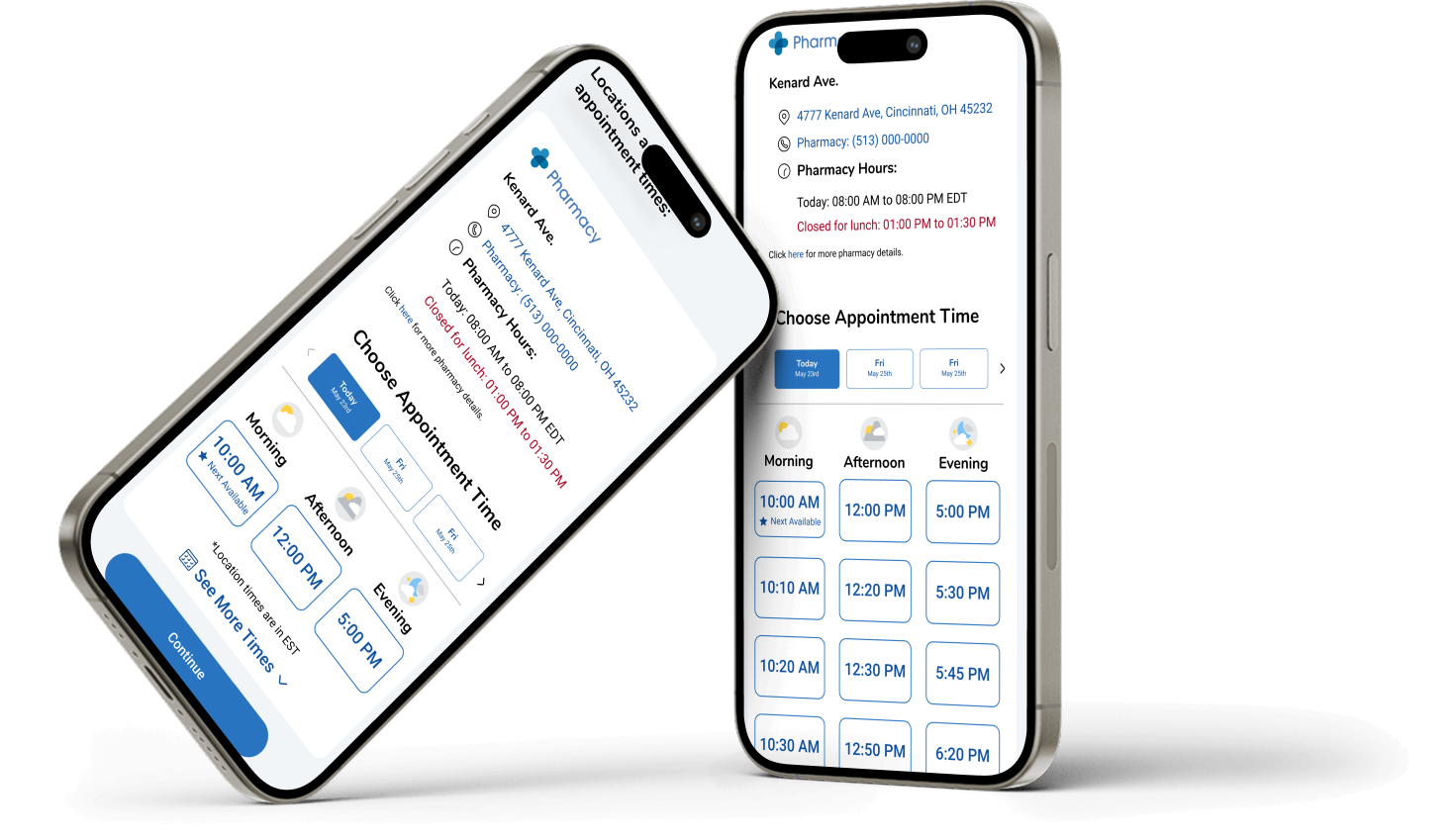
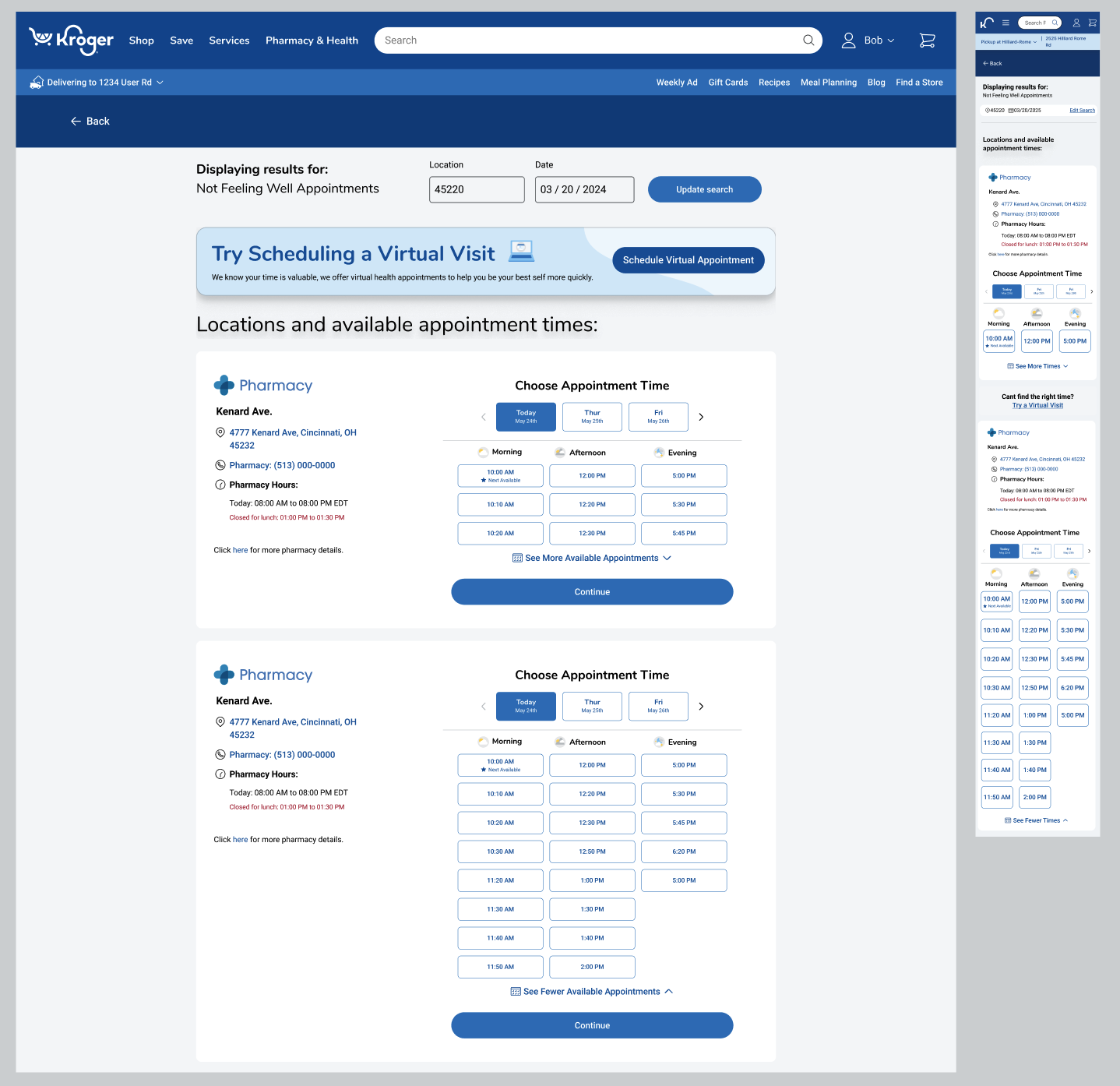
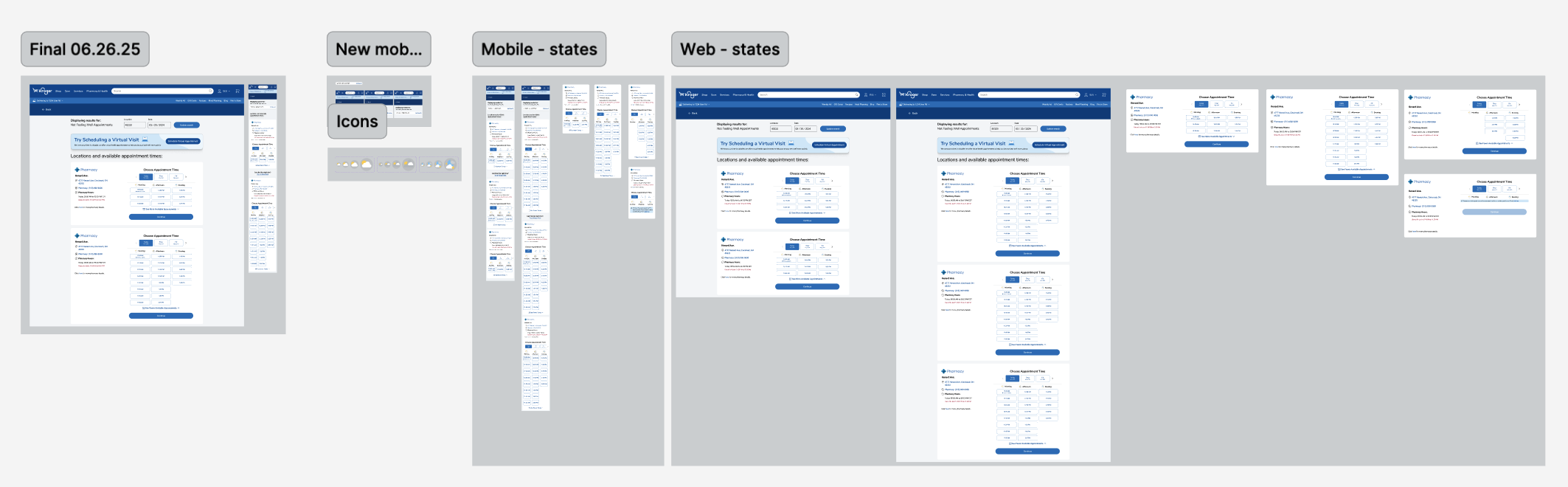
Appointment Time Selection Redesign
Problem
Customers lacked confidence when selecting appointment times due to unclear availability rules and inconsistent messaging across surfaces. Associates also faced downstream friction when expectations didn’t match reality.
Approach
I partnered with product, engineering, and analytics to rethink how availability and constraints were communicated—focusing on transparency without overwhelming users.
Solution Highlights
Simplified time-slot presentation
Contextual messaging explaining availability and restrictions
Alignment between customer and associate views to reduce rework
Impact
Improved appointment selection confidence
Reduced rescheduling and clarification at the store level
Established a reusable pattern for future scheduling flows
Outcomes & Impact
Across these initiatives, the scheduling ecosystem became:
Easier for customers to navigate
More resilient during peak demand
Clearer and more efficient for pharmacy and clinic teams
Key outcomes included:
Significant drop-off reduction
Increased vaccine volume
Improved operational alignment across teams
Scalable patterns adopted across additional services
What I learned
Designing healthcare systems at scale reinforced the importance of:
Treating workflows as interconnected systems, not isolated screens
Designing for both customers and the teams supporting them
Making constraints visible in ways that build trust, not friction
Partnering deeply across disciplines to navigate ambiguity
What’s next
Future opportunities include:
Expanding scheduling patterns to additional services
Further personalization based on user history and eligibility
Continued alignment between digital experiences and in-store operations